

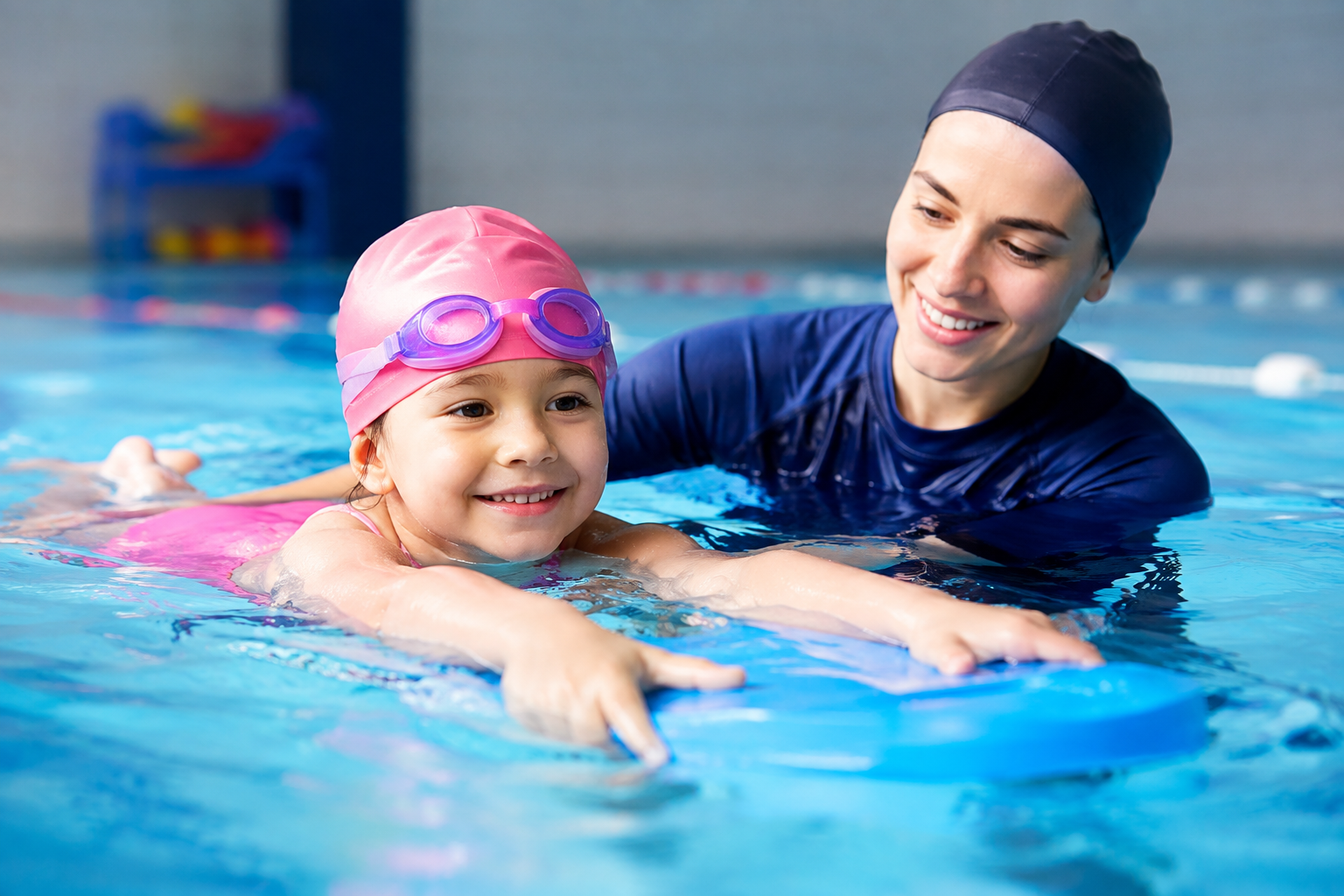
Starting swimming lessons is a big step for a child. For some children, the first experience of a swimming lesson is exciting. For others, it can feel unfamiliar or even a little daunting.
Parents often wonder what will actually happen during those first few sessions. Will their child start swimming straight away? Will they put their face in the water? How quickly will they learn to float or kick?
The answer depends on the child. Beginner swimming lessons are not about rushing through a list of strokes. The first stage is about helping children become comfortable in the water while gradually developing the skills, confidence and awareness they need to swim safely.
At Ascot Swim School, children learn through structured, progressive lessons designed around their existing ability. Here is what parents can generally expect as their child begins learning to swim.
What Is a Beginner Swimmer?
A beginner swimmer is simply a child who is still developing their basic swimming skills.
They may have never had formal swimming lessons before. They may be comfortable playing in the water but unable to swim independently. Or they may already know a few basic movements but need more confidence, control and consistency.
Every child arrives with a different level of experience.
One child might happily put their face in the water but struggle with floating. Another might be confident moving around the pool but become nervous when asked to swim without support. A good swimming lesson recognises these differences rather than expecting every child to progress in the same way.
The aim is to build skills gradually, giving children time to understand what they are being asked to do and become increasingly comfortable in the water.
What Happens During a Child’s First Swimming Lessons?
The first few lessons are usually about much more than learning a swimming stroke.
Children need time to become familiar with the pool environment, their teacher and the expectations of a swimming lesson. They may need to adjust to the noise around the pool, the feel of the water, and the simple instructions from their teacher.
Early lessons may introduce children to:
- Entering and moving safely in the water
- Putting their face in the water
- Blowing bubbles
- Floating with support
- Basic kicking movements
- Simple arm movements
- Changing body position
- Listening to instructions
- Moving through the water with increasing independence
These skills may seem simple, but they provide the foundation for more advanced swimming later.
A child does not need to master everything in their first few lessons. In fact, expecting them to do so can create unnecessary pressure.
Instead, teachers can repeat important movements and gradually make activities more challenging as the child’s confidence and ability develop.
The First Swimming Skills Your Child Will Develop
1. Water Confidence
Confidence is one of the first things a beginner needs to develop.
A child who feels uncomfortable in the water may find it difficult to concentrate on instructions or attempt new movements. Building familiarity with the water can therefore be an important part of early swimming development.
Children may gradually become more comfortable getting into the pool, putting their face in the water, floating and moving without relying completely on an adult.
Confidence does not appear after one lesson. It develops through positive experiences and regular practice.
2. Body Position and Balance
Learning how the body behaves in the water is another important early skill.
Children begin to understand how changing their body position can affect the way they move. They may practise floating, stretching out and maintaining a more balanced position in the water.
Good body position eventually helps children swim more efficiently because they learn to work with the water rather than simply pushing through it.
3. Floating
Floating is a fundamental swimming skill.
For some children, allowing the water to support their body can feel strange at first. They may instinctively try to lift their head or tense their body.
With patient instruction and practice, children can begin to understand how to relax, maintain their position and trust the water.
Floating also helps children develop greater awareness of their body and their position in the pool.
4. Kicking
Basic kicking is introduced progressively.
Children may initially practise kicking while holding onto the pool wall or with appropriate support. As their control improves, they can begin using their legs more consistently to help them move through the water.
The aim is not simply to kick as hard as possible. Children need to learn controlled movement and understand how their legs contribute to propulsion and balance.
5. Arm Movements
Once children become more comfortable with basic movements, teachers can introduce simple arm actions.
These activities help children begin to coordinate their arms with their body position and leg movement.
Over time, these basic movements contribute towards more recognisable swimming strokes. However, the exact progression will depend on the child’s ability and confidence.
6. Breathing and Coordination
Breathing can be one of the more challenging parts of learning to swim.
Children need to become comfortable with having their face in the water and learn how breathing works alongside movement.
This is not something every child will master immediately. Teachers can introduce breathing gradually, allowing children to develop coordination without feeling rushed.
As their confidence grows, breathing becomes a more natural part of their swimming.
How Does a Child Progress From Beginner to Swimmer?
Swimming development is usually gradual.
A child may first become comfortable in the water before learning to float independently. They may then develop better kicking and arm movements before beginning to combine different skills.
As these abilities improve, children can start working on stroke technique, coordination and greater independence.
There is no universal timetable.
Two children of the same age can attend the same number of lessons and progress differently. Previous experience, confidence, coordination, regular attendance and how comfortable a child feels in the water can all influence their development.
This is why good swimming instruction focuses on progression rather than putting children under pressure to reach a particular skill by a particular date.
Why Confidence Matters as Much as Technique
Swimming technique is important, but confidence plays a major role in helping children learn.
A child who feels comfortable in the water is generally more willing to listen, practise and attempt something unfamiliar. They can make mistakes without immediately becoming discouraged.
This does not mean children should be pushed beyond what they are ready for. Quite the opposite.
A supportive lesson gives children opportunities to challenge themselves while still feeling secure. Small achievements can then build towards larger ones.
For a beginner, putting their face in the water for the first time, floating independently or swimming a short distance can all be meaningful milestones.
How Small Classes Can Help Beginner Swimmers
The size of a swimming class can make a difference to the experience a beginner receives.
In a smaller class, a teacher has more opportunity to observe individual children and identify where they need additional support. This can be particularly useful when children have different levels of confidence or ability.
At Ascot Swim School, small class sizes allow teachers to provide individual attention while maintaining a friendly and supportive learning environment.
For a nervous beginner, having the teacher recognise when they need reassurance can be just as valuable as receiving technical instruction.
Small classes do not mean every child will progress at the same rate. They simply provide more opportunity for individual guidance within the lesson.
Why Qualified Swimming Teachers Matter
Parents naturally want their child’s swimming lessons to be safe as well as enjoyable.
A qualified swimming teacher understands how to introduce skills progressively and how to adapt activities for children with different levels of ability.
At Ascot Swim School, teachers hold current Swim England, ASA or STA teaching qualifications and have up-to-date DBS checks.
This reassures parents that lessons are being delivered by teachers with appropriate swimming teaching knowledge and safeguarding checks.
A qualified teacher also understands that teaching a beginner is not simply about demonstrating a stroke. Children need clear instructions, encouragement, appropriate progression and a learning environment where they can develop at a suitable pace.
How Parents Can Support Swimming Progress at Home
Parents can have a positive influence on their child’s swimming journey without turning practice into pressure.
A few simple things can help:
- Encourage effort rather than expecting perfection.
- Celebrate small improvements.
- Avoid comparing your child with other swimmers.
- Listen to the teacher’s advice and reinforce positive habits.
- Keep swimming lessons regular where possible.
- Give your child time to become comfortable with new skills.
Most importantly, try to keep swimming a positive experience.
Children are more likely to develop a lasting interest in swimming when they associate lessons with encouragement, achievement and enjoyment.
How Long Does It Take a Child to Learn to Swim?
There is no fixed number of lessons that guarantees a child will learn to swim.
Some children progress quickly, while others need more time to develop confidence and coordination. Previous experience in the water can also make a difference.
Regular lessons can help children maintain continuity and build on skills they have already learned. Missing occasional lessons is unavoidable for many families, but consistent attendance can make it easier for children to maintain their progress.
Rather than focusing on a specific number of lessons, parents should look for steady development in areas such as confidence, water awareness, body position, movement and independence.
Beginner Swimming Lessons at Ascot Swim School
Ascot Swim School provides swimming lessons for children aged 3.5 to 13 at LVS Ascot, London Road, Ascot, Berkshire.
The school’s approach focuses on helping children develop confidence, water safety awareness, swimming ability and sound technique through structured, progressive lessons.
Small classes allow teachers to give children individual attention while maintaining a friendly and supportive environment.
Whether your child is completely new to swimming or has some previous experience but still needs to build confidence, the first few lessons are an opportunity to establish strong foundations for future swimming development.
To find out more about swimming lessons for your child, contact Ascot Swim School on 07458907668 or email ascotswimschool@gmail.com
Final Thoughts
The first few swimming lessons are about building foundations.
A child may not swim a perfect length of the pool straight away, and they do not need to. Learning to swim involves developing a series of connected skills, from becoming comfortable in the water to floating, kicking, breathing, coordinating movements and eventually swimming with greater independence.
For parents, the most important thing is to choose an environment where their child feels safe, supported and encouraged to progress.
With regular practice, qualified instruction and plenty of patience, those small early achievements can become the foundation for confident and capable swimming.