

Most parents can remember the first time their child stood at the edge of a pool, gripping a towel and deciding whether this was a good idea. That moment matters more than it looks. A child who learns to enjoy the water early tends to carry that confidence with them, and a child who is rushed can carry the nerves just as long.
If your child is about to start children’s swim classes in Ascot, or is already attending and still hesitant, this guide is for you. It covers why confidence matters more than technique at the start, what you can do at home, and what a good swim school should be doing in the water. It draws on what we’ve seen teaching at the LVS pool since 2003.
Why Confidence Comes Before Technique
It’s tempting to measure progress by strokes and distance. But a child who is afraid of the water can’t use technique properly, because tense muscles sink and a worried mind forgets instructions.
Early lessons are therefore less about “swimming” and more about being happy in the pool: getting the face wet, floating with support and moving around without fear. Once that feeling is secure, technique follows much faster.
The wider picture shows why this matters. Swimming is on the national curriculum because it’s a safety skill, and the numbers are still not where they should be. Sport England’s Active Lives Children’s Survey found that 73% of children now leave primary school able to swim 25 metres, up 3% in the last year. Swim England has also noted that this is still below the 2017 level. Building confident swimmers early is one of the best ways to improve that.
Is Feeling Nervous Normal?
Yes, and very common. Water feels different from anything else a young child experiences. It’s cold on the skin, it moves, and it can splash into the face. Some children take to it straight away, and others need a few weeks to settle. Neither is a sign of how good a swimmer they’ll become.
What helps most is patience. A nervous child who is allowed to progress at their own pace usually catches up quickly, while a child who is pushed can dig in further.
What You Can Do at Home Before the First Lesson
Small, playful habits make a real difference.
Practise in the Bath
Let your child blow bubbles, pour water gently over their own head and splash freely. Keep it relaxed. The aim is for water on the face to feel ordinary.
Talk About It Positively
Describe the lesson as something fun rather than something to pass. “You’ll get to play games with the toys in the pool” works better than “you need to learn to swim today.”
Visit the Pool First if You Can
Seeing the space beforehand removes a lot of the unknown. If you’d like a preview, have a look at our pool so your child knows what to expect.
Prepare the Practical Side
Bring a towel and a snack, and tie long hair back. A child who is warm, fed and comfortable concentrates much better.
How a Good Swim School Builds Confidence
Your efforts at home help, but the swim school plays the biggest part. Here’s what to look for.
Small Classes With Individual Attention
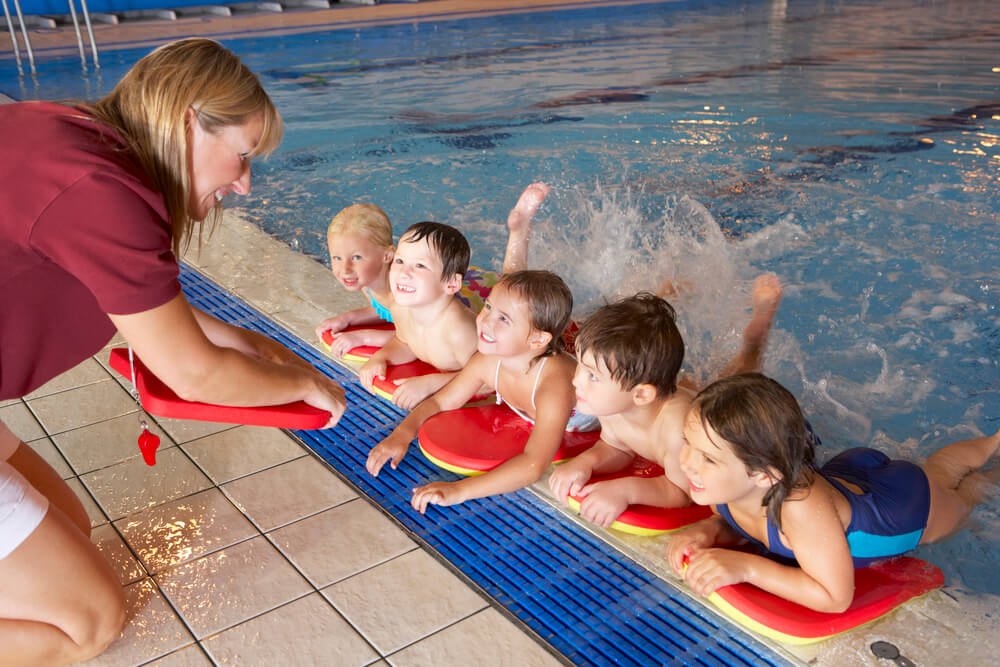
A shy child can easily be overlooked in a large group. At Ascot Swim School, beginner classes are limited to five children, with a teacher and an assistant in the water throughout. That means someone is always close enough to reassure a child and notice small wins.
Qualified and Safeguarded Teachers
Trust is part of confidence. Our teachers hold Level 2 qualifications from STA, ASA or Swim England and have up-to-date DBS checks. They also complete NSPCC or Swim England safeguarding training, and the school has a qualified Designated Safeguarding Officer. You can learn more on our About Us page.
A Warm, Shallow and Accessible Pool
A cold pool makes everyone tense. Ours is a 25-metre deck-level pool kept at a comfortable 29°C. The shallow end starts at 0.9 metres and runs for 10 metres, so young swimmers can often stand and feel in control while they learn to breathe and move.
Games, Toys and Gentle Pace
Our lessons use games, sinkers, toys and armbands to introduce skills without making them feel like tests. Each lesson lasts 30 minutes, which is long enough to learn something but short enough to keep little swimmers from tiring.
What Progress Looks Like
Progress isn’t always dramatic week to week, but there’s a clear pattern.
Early Lessons Focus on Water Confidence
From age 3.5, children get used to the water, put their faces in and float with support.
Beginner Lessons Build the Basics
Next come floating unaided, submerging fully and swimming a short distance without help. Parents often see the biggest change here.
Improvers Work on Stroke, Breathing and Distance
Older or more confident swimmers refine technique and stamina. We teach children aged 3.5 to 13, so there’s a natural path as they grow.
Children work towards Swim England Learn to Swim awards, and you can see the stages on our awards page. Small, visible goals like these give children a real sense of achievement.
Tips for Parents on Lesson Day
- Arrive a few minutes early. Rushing creates stress before the lesson even begins.
- Stay calm and cheerful. Children pick up on a parent’s mood, so if you seem relaxed, they’re more likely to be.
- Let the teacher lead. Our poolside benches let you watch comfortably, and children often settle faster when they’re not looking to a parent for rescue.
- Praise effort, not perfection. “You put your face in the water!” builds more confidence than “you’re a great swimmer.”
- Keep lessons regular. Weekly sessions work best because each skill builds on the last.
- Avoid comparing. Every child learns at a different speed, and comparisons rarely help.
What If My Child Cries or Refuses to Get In?
It happens, and it usually passes. Stay calm, avoid forcing the issue and let the teacher guide the next step. Sometimes sitting on the pool edge for a lesson or two is a perfectly good start. Tell the teacher about any worries in advance so they can plan a gentle introduction. If you’d like a quick conversation before booking, you’re welcome to get in touch with us.
Lesson Times and Location
Classes run for 30 minutes on Monday evenings and Sunday mornings, with several slots each day. Lessons take place at Licensed Victuallers’ School (LVS), London Road, Ascot, Berkshire SL5 8DR. Most of our swimmers live in Ascot, Sunninghill, Bracknell and nearby parts of Berkshire. Places in beginner classes are limited, so it’s worth checking availability early.
Final Thoughts
Confidence in the water doesn’t appear overnight, but it grows steadily when children feel safe, supported and in no hurry. The right children’s swim classes in Ascot combine small groups, qualified teachers, a warm pool and a patient pace, and parents play their part by keeping things positive and relaxed.
If you’d like help choosing the right class for your child, contact Ascot Swim School and we’ll be happy to talk it through. You can also read more on our blog, hear from other families on our testimonials page, or return to the Ascot Swim School homepage.